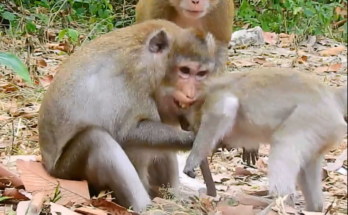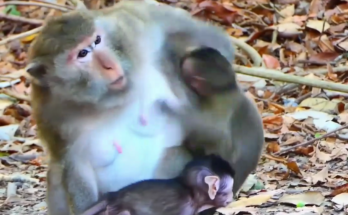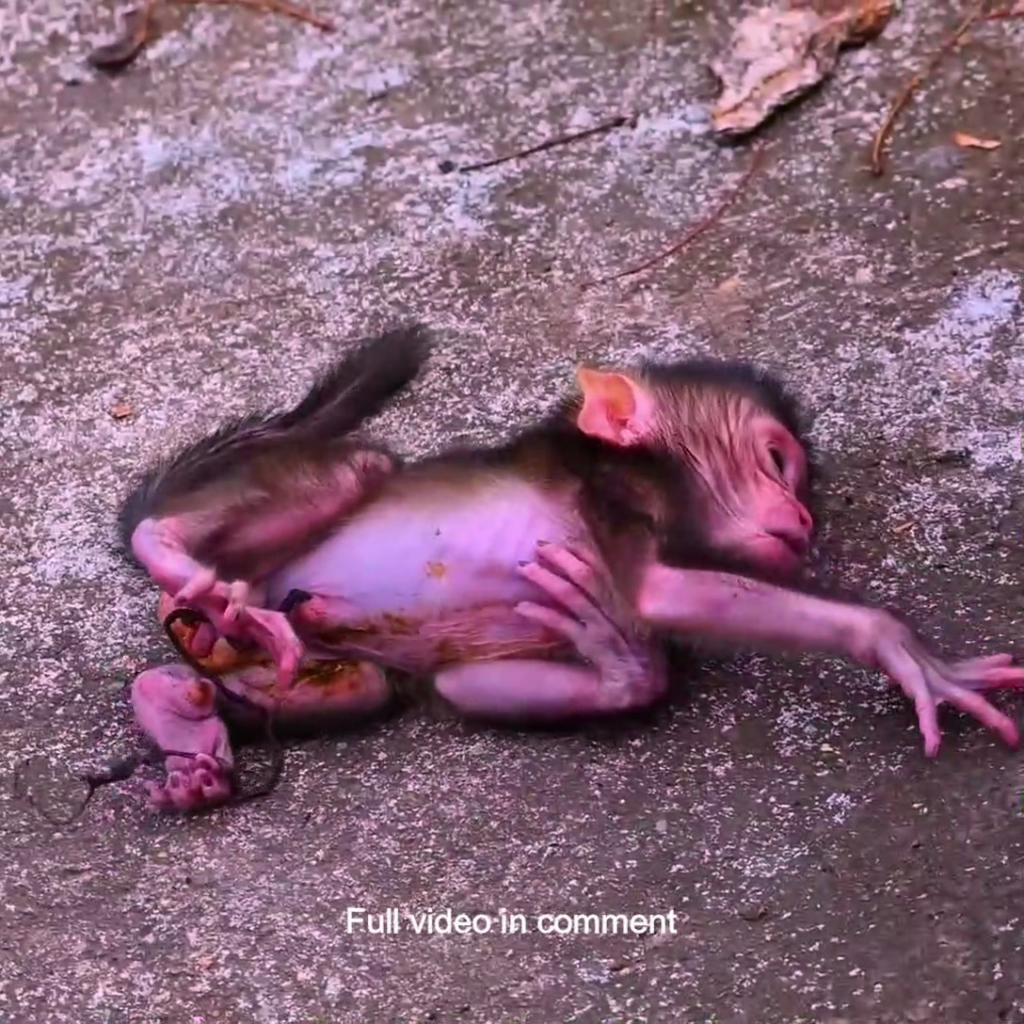
The heart-wrenching scene of a baby monkey crying evokes deep empathy, particularly when one learns that it has been abandoned by its mother shortly after birth. This young primate, still fragile and vulnerable, finds itself alone in a world that can be both beautiful and harsh. The cries of the baby monkey resonate with a sense of loss and desperation, highlighting the instinctual bond that typically exists between a mother and her offspring. In the wild, such bonds are crucial for survival, as the mother provides not only nourishment but also protection and guidance during the early stages of life. Abandonment in the animal kingdom can occur for various reasons, including maternal stress, health issues, or environmental factors that may compel a mother to leave her young. In this case, the baby monkey’s cries serve as a poignant reminder of the challenges faced by wildlife, where the struggle for survival is often fraught with peril. The emotional weight of the situation is compounded by the fact that the baby is entirely dependent on its mother for sustenance and care. Without that vital support, the future of the infant monkey hangs in the balance, raising questions about its fate in the unforgiving wilderness. Efforts to rescue and rehabilitate such abandoned animals are crucial in wildlife conservation. Organizations dedicated to animal welfare often step in to provide care for these vulnerable creatures, offering them a second chance at life. Through specialized care, including feeding, socialization, and eventual reintegration into their natural habitat, these initiatives aim to restore the balance that was disrupted by abandonment. The plight of the baby monkey serves as a powerful reminder of the interconnectedness of life and the importance of protecting the delicate ecosystems that support both animal and human existence.